Original article published in Global Mining Review. Published with permission.
The global mining industry is undergoing a structural shift as operators respond to increasing environmental, regulatory, and social expectations to reduce greenhouse gas emissions while maintaining safety, productivity, and cost discipline. Commitments aligned with Net Zero 2050 targets, as outlined under the Paris Agreement, have prompted mining companies to reassess energy use across all operational areas including mine dewatering.
Dewatering is critical in both open-cut and underground mining operations. Pumps are required to operate continuously, often under extreme environmental conditions, to maintain pit access and protect infrastructure from flooding. Historically, diesel engine-driven pumps have dominated this application due to their independence from fixed electrical infrastructure. However, advances in electrical power distribution, motor technology, and variable frequency drives (VFDs) have expanded the feasibility of electric pumping solutions in environments once considered unsuitable.
This article examines the role of electric dewatering pumps in supporting mining sustainability objectives, using Sykes Electric Range (ER) of pumps as real-world examples of how modern electric solutions are being engineered to meet the performance, reliability, and flexibility demands of mining operations. It also explores the technical, economic, and operational considerations involved in transitioning from diesel to electric pumping systems, including retrofit options for existing assets.
Traditional Reliance on Diesel-Driven Dewatering Pumps
Traditionally diesel engine-driven dewatering pumps have been favoured in mining due to their mobility and independence from grid power. They can be deployed almost anywhere, making them suitable for early-stage operations or short-term water transfer applications, to ensure access to the ore bodies situated in remote areas of the mine.
However, diesel systems carry operational drawbacks. Regular refuelling increases vehicle movements and operator exposure, particularly where pumps are dispersed across large sites, kilometres away from fuel storage facilities.
Some operators mitigate fuel logistics with large on-site tanks capable of supplying up to seven days of uninterrupted operation. However, these measures add weight, complexity, and cost especially when tanks are mounted on the pump skid.
Maintenance requirements also contribute to higher operating expenditure. Diesel engines require frequent servicing (typically every 250 to 500 hours) along with ongoing management of fuel quality, filters, oil, and cooling systems. While optional telemetry systems can provide real-time monitoring of fuel levels, they do not remove the underlying emissions, cost, or safety challenges associated with diesel-operated dewatering pumps.
Drivers for Electrification in Mining Dewatering
The move toward electrification in mining is being driven by a combination of sustainability targets, cost pressures, and infrastructure development.
Many mining operations are investing in fixed electrical infrastructure at remote locations to support long-term dewatering operations, while also integrating renewable energy sources such as solar, wind, and battery storage.
Electric motor-driven pumps offer higher inherent energy efficiency compared to internal combustion engines and typically require less routine maintenance. Eliminating diesel combustion reduces onsite emissions of CO₂, NOₓ, and particulates, contributing to improved air quality and supporting compliance with environmental regulations. Noise levels are also reduced, which can be beneficial in both underground and surface operations.
Engineering Developments Enabling Electric Pumps in Harsh Environments
Sykes is leading the transition to electric pumps with their Electric Range – a comprehensive portfolio designed to match (and often exceed) diesel performance while accelerating decarbonisation.
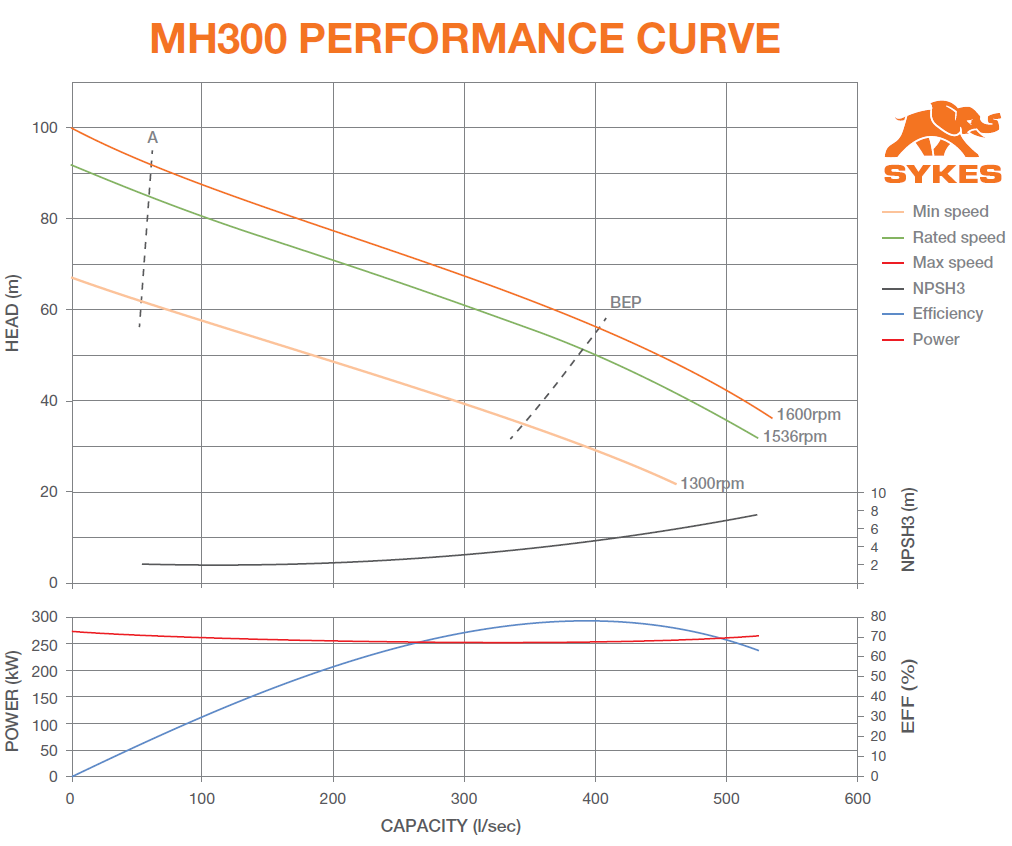
For example, Sykes ER Electric Range includes Direct-On-Line (DOL), Soft Starter (SS), and VFD-driven configurations across its CP (Contractor), MH (Medium Head), HH (High Head), and XH (Extra High Head) pump ranges. VFD systems allow pumps to operate across a frequency range typically from 30 Hz (900rpm) to 80 Hz (2400rpm), extending the operating window beyond what is achievable with diesel engines which are generally constrained to minimum speeds of around 1,400 rpm.
The Sykes ER Electric Range delivers meaningful OPEX reductions through energy and maintenance savings.
As an example, the initial capital cost of a 315 Kw Sykes ER electric pump build with a Variable Frequency Drive (VFD) in an air-conditioned container is 50% more than the same pump that is diesel driven. For a pump running 24 hours per day for the first year, the savings in servicing and the difference in diesel fuel costs vs electricity is substantial enough to equate to a reduction in total costs of up to 10%. The savings from each year following the first can be up to 40%.
The below table provides an illustrative cost-benefit analysis to show site-specific savings. Actual figures may vary based on tariffs, fuel, and power costs specific to site and does not include labour hours required for refuelling.
| DIESEL | ELECTRIC | |
|---|---|---|
| 1st Year | ||
| Capital Cost | $350,000 | $525,000 |
| Service | $90,000 | $36,000 |
| Fuel / Power | $990,000 | $745,000 |
| Total Capex And Opex Cost: | $1,430,000 | $1,306,000 |
| Overall Saving | ~10% | |
| Each Year After | ||
| Capital Cost | ||
| Service | $90,000 | $36,000 |
| Fuel / Power | $990,000 | $745,000 |
| Total Capex And Opex Cost: | $1,080,000 | $781,000 |
| Overall Saving | ~30% | |
In addition to direct cost savings, electric dewatering pumps offer qualitative operational benefits. Reduced reliance on refuelling eliminates many routine site visits, lowering vehicle movements, improving safety, and reducing indirect emissions associated with transport. Maintenance planning is also simplified, as electric drives remove the need for engine overhauls, oil changes, and fuel management, which in turn reduces unplanned downtime and helps ensure pumps remain available during critical weather and high-inflow events.
Engineered Mobility for Mining Duty
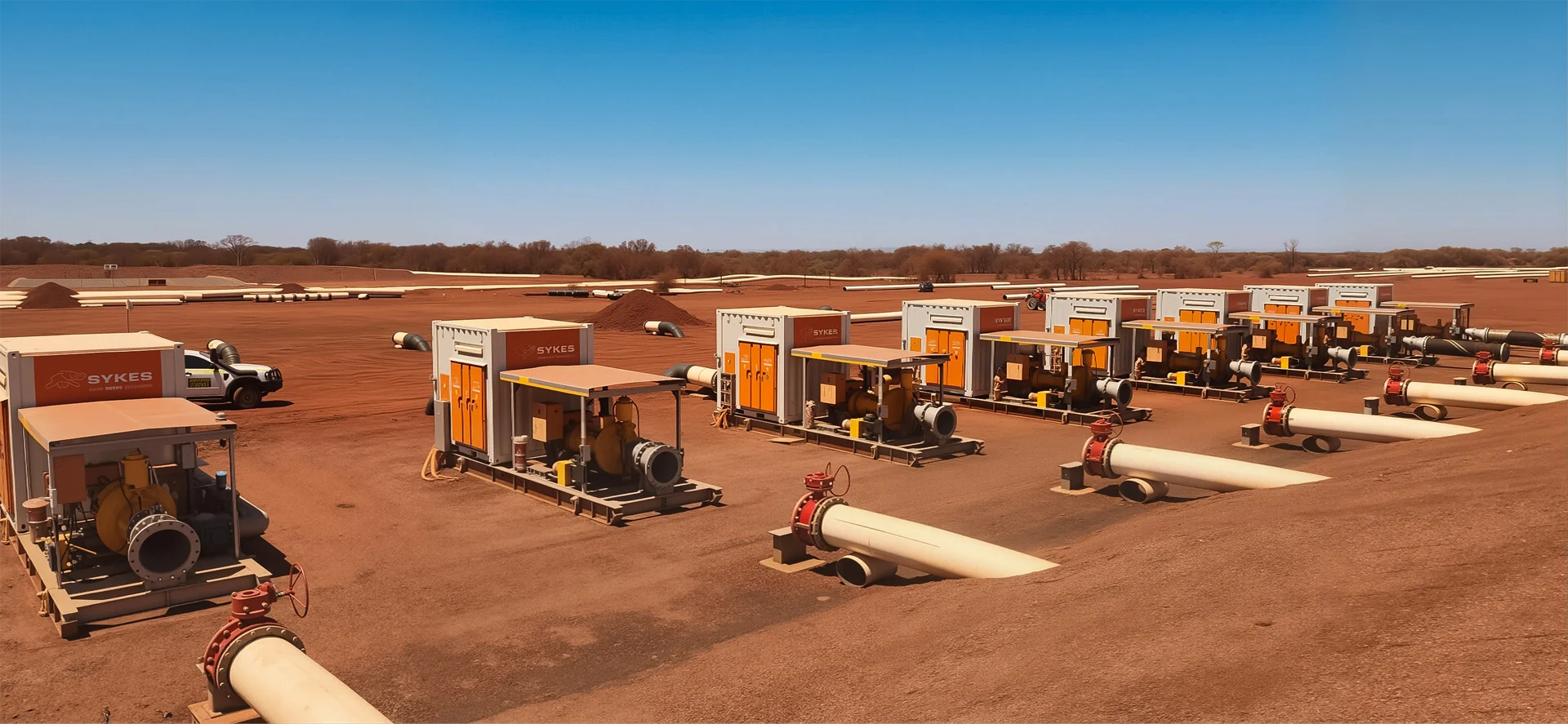
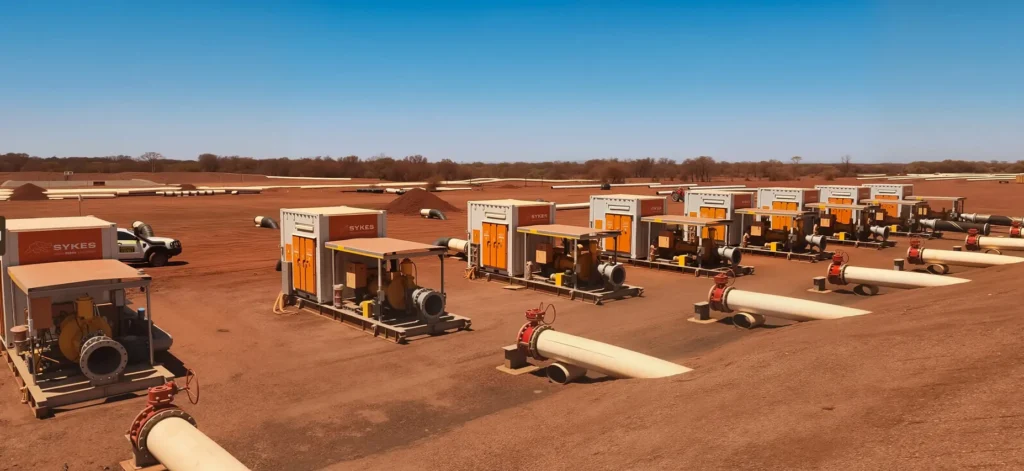
Sykes ER electric pumps offer the same flexibility as diesel-driven pumps. They can be supplied on standard galvanised bases or as heavy-duty mining builds. Popular options include heavy-duty push bars, Bisalloy wear strips for towing, rear discharge pipework with drain valves ( 2″ ), flow meters, geared butterfly valves, air-release valves, eccentric suction reducers, concentric discharge spools, pressure transducers, trailing-wire loss-of-flow protection, heavy-duty lift frames, and canopies. Pump skids can also be designed to allow mounting of the Direct-On-Line (DOL), Soft Starter (SS), or the Variable Frequency drive (VFD).
In addition to the typical pump arrangement, Sykes can also supply complete bespoke packages suitable for large dewatering dams. These packages can include floating pontoons, walkways with kick plates and cable trays, associated pipework and floats, installation support, and ongoing service with OEM spares.
Priming Systems and Operational Reliability
Automatic priming remains essential for mine dewatering pumps. In electric pump installations, compressor, diaphragm, or vacuum priming systems can be utilised, selected based on suction line length, diameter, and environmental considerations.
Sykes ER pumps are available with multiple priming options, allowing operators to balance priming speed, environmental impact, and capital cost. Faster priming reduces downtime during critical weather events and supports rapid response to changing inflows.
Case Study: Electric Dewatering in a Deep Open-Cut Mine
As open-cut pits deepen, static head and friction losses increase, placing greater demands on dewatering systems. One operation faced increasing inflows during seasonal rainfall, with projected requirements reaching approximately 150 L/s at 250 m total dynamic head.
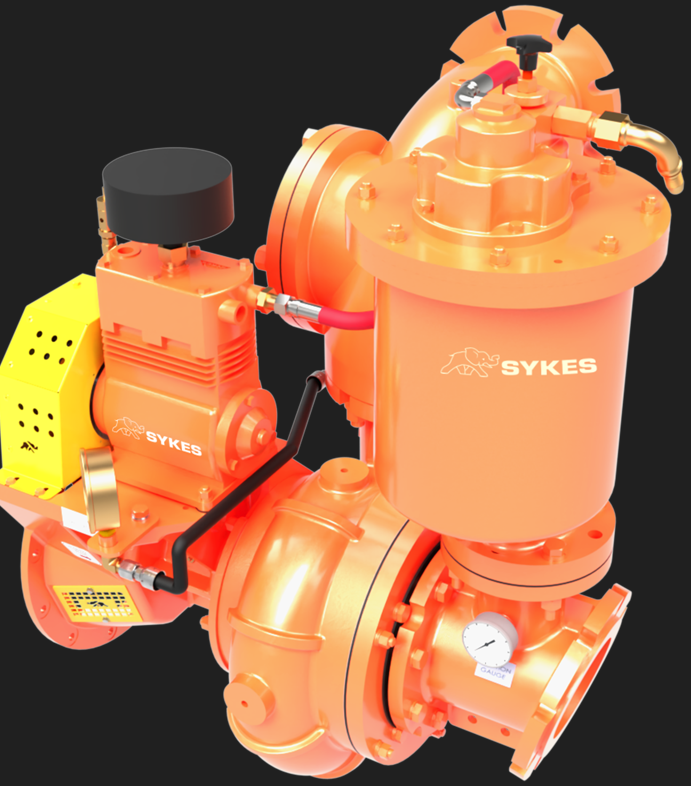
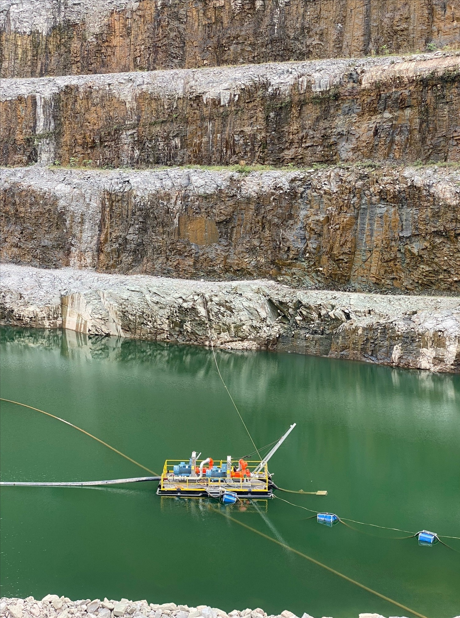
To meet this duty, the operation deployed Sykes XH200 electric pumps configured in a (?) series on a pontoon arrangement. Each pump was driven by an electric motor and controlled via a VFD, allowing pump speed to be adjusted to match inflow rates and maintain sump levels within a tight operating band.
By operating each XH200 pump at approximately 1,500 rpm, the system achieved the required combined head and flow, while operating within the pumps’ optimal efficiency range. Automatic priming systems reduced start-up delays, prevented spills at the sump, and climate-controlled enclosures protected electrical components from ambient heat and weather exposure.
The transition to electric pumping eliminated daily diesel refuelling runs, reduced vehicle movements, and simplified maintenance planning. While site-specific cost savings depend on local power tariffs and operating conditions, the operation reported reduced operator exposure hours, and improved logistical efficiency compared with previous diesel-based arrangements.
Retrofit Pathways: Diesel-to-Electric Conversion
Not every site can switch to new electric packages immediately. To accelerate decarbonisation and extend asset life, Sykes offers engineered conversion kits that replace diesel engines with electric motor driven solutions on existing dewatering pumps. This pathway reduces emissions and total cost of ownership while preserving familiar hydraulics and footprint.
Implementation Considerations
To maximise value from an ER electric deployment, consider the following best-practice steps:
- Electrical access and distribution: Map available power sources to pump locations. Many mines now provision remote electrical infrastructure in anticipation of long-term dewatering needs.
- Duty definition: Quantify minimum, normal, and peak inflows, total dynamic head across seasons, and planned changes in mine geometry. Use this to select the right pump size and define VFD control logic that tracks BEP as conditions change.
- Thermal management: Where ambient temperatures are high, specify air-conditioned containers or water-cooled VFDs to ensure electrical reliability and uptime.
- Priming strategy: Align the priming system with environmental requirements, suction line length and diameter, and start-up frequency (for example, diaphragm or vacuum systems for faster evacuation, and anti-spit configurations where discharge to ground is not acceptable).
- Mobility and protection: Specify heavy-duty frames, towing wear strips, integrated controls, lift frames, and canopies to match relocation frequency and weather exposure.
- Telemetry and control: Whether standalone or integrated with site SCADA, leverage level sensors, pressure transducers, flow switches, and temperature and vibration sensors to enable automated start/stop, alarm handling, and remote performance tracking.
The electrification of dewatering pumps is emerging as a practical and increasingly viable option for mining companies seeking to align operational performance with sustainability objectives. Advances in motor technology, drive systems, materials, and system integration have expanded the range of applications where electric pumps can operate reliably under extreme conditions.
The Sykes ER Electric Range sets the benchmark for employing electric dewatering solutions across low, medium, high, and extra-high head duties without compromising hydraulic performance. For operations with existing diesel assets, conversion kits offer a transitional solution that supports decarbonisation while preserving capital investment.
As mining sites continue to invest in electrical infrastructure and long-term planning, electric dewatering pumps are positioned to play a growing role in reliable water management and lower-emission mining operations.
To find out more about Sykes Electric Range, whether buying new or converting your existing pumps to electric, contact the team at Sykes today.
Chris O’Brien
Global Product Manager, Sykes Group